


To be patentable, an invention must be novel (A52 EPC).
Definition of novelty
An invention is novel if it is not disclosed by the prior art (A54(1) EPC).
For the definition of prior art, please refer to The definition of relevant prior art.
Proof of disclosure
Regarding proof of disclosure, please refer to the page Proof of disclosure.
Use of disclosures to challenge novelty
Principle: no combination
For novelty, it is normally necessary to limit oneself to a single document and within that document to a single embodiment (T291/85 and Guidelines G-VI 1).
Indeed, if one could combine all disclosures within a single document (i.e., regardless of the embodiment), it would be easy to take a large catalog and extract the desired technical teachings at random (T305/87, shears).
Exceptions
However, a general teaching of a document may be used in a particular example of that document (T1046/97) unless that example contradicts the rest of the document (T332/87).
A combination is also possible if:
- this combination was expressly suggested (T305/87) (and these were accessible at the filing date, Guidelines G-VI 8 and T153/85);
- this combination could have been seriously contemplated by a person skilled in the art (T666/89), for example if it is suggested unambiguously.
The content that may be combined will then be the content referred to: no more.
Of course, it is possible to use technical dictionaries or reference works (even those published after the application) to interpret the claims (Guidelines G-VI 1).
Assessment of novelty based on the formulation of the claims under attack
Invention and range of values
Introduction
A selection invention consists of selecting (Guidelines G-VI 8), within a known set or range:
- individual elements,
- subsets,
- limited sub-ranges of values that have not been explicitly mentioned.
This selection must not be the inevitable result of a process sufficiently described in the prior art (T12/81).
Selection from an individualized list
A selection is not novel if, for the selection from a list of individualized elements, the selection is made from only a single list (Guidelines G-VI 8 i, e.g., selection of rubber from a list comprising a spring, rubber, etc.).
However, if the selection of elements is made from two (or more) lists to form a combination of features (Guidelines G-VI 8 i, e.g., selection of rubber from a list comprising a spring, rubber, etc., and iron from a list comprising copper, iron, etc.).
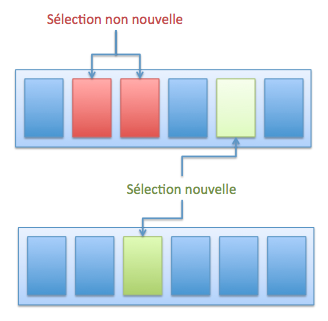
One may still question the consistency of this approach with the decision T1374/07, which considers (for issues under 123(2)) that a selection of two compounds from a single list is equivalent to a selection of compounds from two identical lists…
Selection from a short individualized list
However, if the lists are short (i.e., a few elements), the previous case law does not apply because it will be much simpler for the person skilled in the art to combine (T2350/16).
Selection of a sub-range from a disclosed range
Historical approach
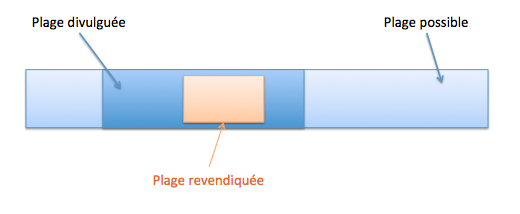
A selection may be novel if, for the selection of a sub-range from a known range of values (T261/15, T279/89, Guidelines G-VI 8 ii), the following conditions are cumulatively satisfied:
- The selected sub-range is narrow compared to the known range of values;
- The selected sub-range is sufficiently remote from any specific example disclosed in the prior art and from the endpoints of the known range of values (T17/85).
It should be noted for completeness that this approach is challenged by the decision T1688/20, which considers that only the criterion of the existence of a direct and unambiguous disclosure is valid.
It may happen that the prior art document discloses a composition of products where each product is within a given range, and the claimed invention proposes the same list of products within sub-ranges. To assess whether the sub-ranges are narrow, the following should be considered:
- Compare each sub-range individually with the corresponding range if the content of the different products is not linked;
- Compare the sub-ranges globally with the disclosed ranges if the content of the different products is linked (T324/13).
An arbitrary selection or without technical effect?
For a long time, the EPO considered that it was additionally required that the selection not be arbitrary and be made with a particular purpose (i.e., roughly, that the selection have a technical effect).
This former approach is no longer applicable since the technical effect of the selection is only relevant for assessing inventive step (T1130/09, T1233/05, T230/07, T1948/10).
Selection of a sub-range overlapping a disclosed range
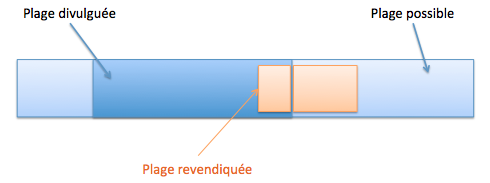
A selection may be novel if, for the selection of a partially overlapping sub-range of a known range of values (T666/89, Guidelines G-VI 8 ii), the following are cumulatively met:
- the selected sub-range is sufficiently remote from any specific example disclosed in the prior art and from the endpoints of the known range of values (T17/85).
- the disclosed values (endpoints or intermediate disclosed values) are excluded by disclaimer,
- the person skilled in the art would not have seriously contemplated working in the overlapping area, as the prior art contained a reasoned statement clearly dissuading the selection of said range of values, even though it was disclosed (e.g., « it is possible to work within the range [0-100°C], but low temperatures yield poor results » T26/85).
The case law T26/85 applies by analogy to a list of individualized elements (T17/85).
It should be noted that case law calls into question the « seriously contemplated » criterion (T989/22). Indeed, the board does not see how to reconcile this criterion with direct and unambiguous disclosure.
Selection of a range containing a disclosed value
As in the previous paragraph, it is necessary to exclude the disclosed value for the claim to be novel.
Focus on the value of endpoints and disclosed values
When a numerical value is given (individually or in a list), it should be understood as a range of values covering the margin of error of the measurement (Guidelines G-VI 8.1).
If no margin is indicated, the range of values allowing for rounding should be considered (e.g., [3.45 cm; 3.54 cm] for an indication of 3.5 cm, Guidelines G-VI 8.1).
By way of illustration, if a claim states that an angle must be strictly greater than 0°, we readily understand that it may be virtually impossible to distinguish between 0° and 0.000001°. Therefore, the disclosure of 0° anticipates « an angle must be strictly greater than 0° » (T386/17).
Use invention
A new use of a known product is considered novel under patent law (i.e., « Use of product X for… ») even if this new use does not require a technical implementation.
This refers to a new use and not a new technical effect: thus, if a new technical effect is discovered but merely « explains » a known use (e.g., a deodorizing effect), the claim will not be novel (T892/94 or T2243/16).
Disclaimers
Disclosed disclaimer
It is possible to include a negative feature from the filing stage (Guidelines H-V 3.5) if:
- there is no clearer or more concise way to protect the claimed subject-matter, or
- a positive feature would unduly limit the scope of the claim.
Undisclosed disclaimer
Principle
Under certain conditions, it may be possible to specifically amend one’s claims in order to restore novelty. This amendment consists of a negative formulation inserted into the claims to exclude prior art (Guidelines H-V 4.1).
The disclaimer is accepted if one of the following conditions is met (G1/03):
- the disclaimer aims to restore novelty by excluding prior art under A54(3) EPC;
- the disclaimer aims to restore novelty by excluding prior art under A54(2) EPC, provided that such prior art is accidental (e.g., entirely different technical problem);
- the disclaimer aims to exclude an embodiment excluded from patentability under A52 EPC to A57 EPC for non-technical reasons (e.g., human cloning).
The disclaimer must also comply with the following conditions (G1/03):
- the disclaimer must be as narrow as possible to achieve the intended purpose, failing which it may contravene A123(2) EPC (noting that the squeeze between A123(2) EPC and A123(3) EPC will subsequently apply, T747/00), unless this is necessary to avoid a lack of clarity (T10/01);
- the disclaimer must not allow circumventing a document for the purpose of inventive step;
- the disclaimer must not allow circumventing the squeeze between A123(2) EPC and A123(3) EPC (T1180/05);
- the disclaimer must not allow excluding an embodiment that does not work;
- the disclaimer must not remedy an insufficiency of disclosure;
- the disclaimer must be clear and concise (T286/06).
Disclaimer by a positive feature?
As previously stated, a disclaimer must be a negative feature: it must remove something from the claim.
Thus, it is not possible to add a disclaimer with a positive feature (T2502/13). For example, if prior art specifies that a material is not made of plastic, it is not possible to state that the material is made of plastic to distinguish over the prior art.
This may seem obvious, but it is better to say it 🙂
Claim category
Therapeutic applications
First therapeutic application
What this covers
The first therapeutic application is provided for under A54(4) EPC.
This article provides that it is possible to claim a product that is not novel for use as a medicament: the claim will then be novel (provided, of course, that the use of this product as a medicament was not known).
The claim will then be drafted as follows:
Product X for use as a medicament, wherein…
The wording of the type « Use of substance X for the treatment of a disease » (Guidelines G-VI 7.1) is prohibited, as therapeutic methods are excluded from patentability (A53(c) EPC).
What this does not cover
However, this exception is limited to « substances or compositions »: a simple therapeutic device (e.g., a scalpel, an MRI, etc.) will not benefit from this exception (T2369/10).
Second therapeutic application
What this covers
The second therapeutic application is provided for under A54(5) EPC.
This article provides that it is possible to claim a product (i.e., substance or composition (A54(5) EPC) that is active (G5/83) and not novel for treating:
- a particular disease;
- a disease that is usually treated with this product, but in a new way (G2/08, different dosage).
The claim will then be novel (provided, of course, that the use of this product for treating this disease was not known).
The claim will then be drafted as follows (Guidelines G-VI 7.1):
Product X for use in the treatment of disease Y, wherein…
Note: Swiss-type claims (i.e., « Use of a substance or composition X for the manufacture of a medicament for therapeutic use Z » or « Method for manufacturing a medicament for therapeutic use Z, characterized in that substance X is used« ) are no longer allowed for applications having a filing date or a priority date prior to 29 January 2011 (G2/08).
What this does not cover
Nevertheless, it is not possible to use the provisions of Article A54(5) EPC to protect a device, even if it is a medical device (e.g., dialysis membrane, T773/10 or T2369/10).
Furthermore, the use of a « non-active » substance (e.g., a polymer used to provide structure to a wall of the human body) is not possible under A54(5) EPC (T2136/15).
However, a substance may be chemically inert and still be active within the meaning of T2003/08 as long as the substance has a therapeutic effect (e.g., produces a beneficial effect on the human body, T264/17).
Process
There is not much to say here: all features of the process must be reproduced.
Process for + purpose
For this type of claim, this « purpose » should be considered as a limitation of the claim (T201/14 or T1931/14).
The wording « for remelting galvanic layers » should not be understood as meaning that the process is solely adapted for remelting galvanic layers, but as a functional feature (G2/88) that relates to the remelting of galvanic layers and thus defines one of the steps of the claimed process (T848/93, Guidelines F-IV 4.13).
However, care must be taken because a « process for … » does not necessarily imply the presence of a functional feature but may only express an aim/effect to be achieved (T1338/18).
It is not necessary for this purpose to be sufficiently described to become a functional feature (T1099/16).
Process for + manufacture/obtaining of a product
Unlike what is mentioned for « processes for + purpose« , the process leading to the obtaining of a product must be interpreted as meaning that it must simply be adapted for this use (T304/08).
It should be noted that decision T268/13 goes in the opposite direction: according to it, only manufacturing processes that result in such a product can be novelty-destroying.
Process for + effect
The addition of a technical effect (which is therefore normally inherent in the positive steps of the process) is not limiting (T848/93 or T1931/14).
Manufacturing process of a new and inventive product
Where the product claim is patentable, there is no need to examine the novelty and inventive step of a process claim that inevitably leads to the manufacture of that product (T119/82, Guidelines F-IV 3.8 and Guidelines G-VII 13).
Product
There is not much to say here: all features of the product must be reproduced.
Normally, a product claim confers absolute protection (in any context, G2/88).
Product defined by a process (« product-by-process »)
The wording of such claims is « Product obtainable by process Y » or equivalent (wording to be preferred over « Product obtained by process Y », T728/98).
Indeed, this product should not be considered novel merely because the manufacturing process is novel: the product as such must satisfy the patentability requirements (Guidelines F-IV 4.12 and T150/82).
Thus, such a claim may well be anticipated by a product manufactured by another method (provided there is no intrinsic feature of the manufacturing process that is present in the product): the burden of proof of any difference nevertheless lies with the applicant (T205/83).
This type of claim should only be used if it is impossible to define the product otherwise.
Product for + purpose
Normally, a product claim confers absolute protection (in any context, G2/88).
Thus, a claim « Product for + purpose » should be viewed as equivalent to the claim « Product » (Guidelines G-VI 7): a substance X intended to be used as a catalyst will not be considered novel over the same substance known as a dye.
However, if the purpose of the object « hides » certain technical features, this will be different: for example, « Device for mixing molten metal » implies that this device withstands high temperatures.
In any case, to analyze this type of claim, it is appropriate to transform expressions such as « device for + purpose » into « device suitable for + purpose » (Guidelines F-IV 4.13).
Use
Use claims must be analyzed as process claims (Guidelines F-IV 4.16).
Use of a novel and inventive product
When the product claim is patentable, it is not necessary to examine the novelty and inventive step of a use claim for that product (T642/94, Guidelines F-IV 3.8 and Guidelines G-VII 13).
Use of a process for + purpose
This type of claim is equivalent to a claim directed to that process (T684/02 and Guidelines F-IV 4.16).
Non-technical features
If a feature is considered non-technical, it must be disregarded for the novelty analysis (T619/98, G2/88, T959/98, T154/04).
In the case of an invention combining technical and non-technical features, one cannot conclude that the claimed subject-matter is not an invention merely because only the non-technical features make a contribution to the prior art (T154/04).
A feature has a non-technical character particularly if the effect of that feature is subjective (T1259/08). Personally, I find this approach odd (at least for the novelty analysis) because a given feature could be deemed technical or non-technical depending on how its technical effect is formulated (e.g., zooming in on an image provides a pleasant graphical effect; zooming in on an image allows for better distinction of details, etc.).
Examples
Expressions such as « preferably, » « for example, » « such as, » etc. are not limiting and are ignored (Guidelines F-IV 4.9).
Explanation of a technical effect
A new explanation of a technical effect does not confer novelty (T892/94).