


Conditions for the Attribution of a Filing Date
« Strong » Conditions
A Description « At First Sight »
The application must include a part that, at first sight, constitutes a description (A11.1.iii.d PCT and A3.2 PCT).
There are no formal requirements.
A Claim « At First Sight »
The application must include a part that, at first sight, constitutes one or more claims (A11.1.iii.e PCT and A3.2 PCT).
There are no formal requirements.
Designation of the Applicant
The application must include the name of the applicant (A11.1.iii.c PCT) to establish their identity.
It is only necessary to indicate one of the applicants, and this applicant must be at least one for whom the indication of nationality or domicile demonstrates a link with a Contracting State (R26.2bis.b PCT).
Such an irregularity is rare, as it means that the applicant’s name is not mentioned anywhere in the filing documents (R20.1.b PCT):
- even if the name is misspelled,
- even if first names are incomplete,
- even if, in the case of a legal entity, the name is abbreviated or incomplete.
Indication that the Application is an International Application
The application must include an indication that it is filed as an international application (A11.1.iii.a PCT).
This indication is provided if the applicant uses form PCT/RO/101.
« Weak » Conditions
Nationality/Domicile of an Applicant
Principle
Any person domiciled in a Contracting State or any national of such a State may file a PCT application (A9.1 PCT):
At least one of the applicants must be a national of or domiciled in a Contracting State (A11.1.i PCT and R18.3 PCT).
Normally, this nationality or domicile must be in the Contracting State corresponding to the receiving Office (RO), but the safeguard measure (allowing the transfer of any application inadmissible for this reason to the IB) and the number of countries in the PCT make this condition practically without effect (R19.4.a.i PCT).
Definition of Domicile
Although the question of domicile is decided by the RO (R18.1.a PCT), « domicile » at a minimum means the possession of an effective and serious industrial or commercial establishment (R18.1.b.i PCT).
Definition of Nationality
Although the question of nationality is decided by the RO (R18.1.a PCT), « national » at a minimum means a legal entity incorporated in accordance with the laws of a Contracting State (R18.1.b.ii PCT).
Language of the Application
Principle
The application (description and claim R20.1.c PCT) must be drafted in a prescribed language (A11.1.ii PCT), i.e., a language accepted by the RO (R12.1.a PCT).
Languages accepted by the RO
The languages accepted by the RO must include at least (R12.1.b PCT) one language that is (the accepted languages may therefore be more numerous):
- accepted by at least one of the competent ISAs for that RO;
- a publication language under R48.3.a PCT:
- German,
- English,
- Arabic,
- Chinese,
- Korean,
- Spanish,
- French,
- Japanese,
- Portuguese, or
- Russian.
Different languages
If the description and claims are in two different languages (even if both are accepted by the RO), this may prevent the allocation of a filing date.
If another part of the application is in a different language, that part may be translated later without affecting the filing date (for the abstract or drawings, R26.3ter.a PCT) following a possible invitation from the RO.
Safeguard measure
Normally, the language must be one of those accepted by the RO, but the safeguard measure (allowing the transfer to the IB of any application inadmissible for this reason) renders this condition ineffective (R19.4.a.ii PCT), especially since the IB accepts an application drafted in any language, even a language of a non-contracting State (Applicant’s Guide, Annex C, IB).
Designation of States
The application must include the designation of at least one contracting State (A11.1.iii.b PCT).
However, this condition is without effect, as since 2004, the filing of a PCT application constitutes the designation of all member States (R4.9.a PCT).
An exclusion of certain designations is possible to prevent the « auto-designation effect » provided for by certain national laws (R4.9.b PCT, an effect linked to the designation of a given State when the earlier national application from which priority is claimed was filed in that same State).
The only designations that may currently be excluded are:
- DE: German Patent and Trademark Office
- JP: Japan Patent Office
- KR: Korean Intellectual Property Office
The exclusion of a designation is irrevocable and irreversible.
Irregularities or reference to an earlier application
Failure to meet minimum requirements
General Principle
Failure to comply with one of the minimum requirements mentioned above results in the receiving Office (RO) sending a notification to the applicant (A11.1 PCT together with R20.3.a PCT).
Upon receipt of this invitation, the applicant has a two-month period (R20.7.a.i PCT) from the date of notification to remedy the filing:
- if the filing is remedied, the filing date shall then be the date on which the RO receives the correction (R20.3.b.i PCT);
- if the filing is not remedied, there shall be no filing date (R20.4 PCT).
In any event, if no invitation is sent (e.g., the RO does not have the applicant’s address or does not identify an error), the two-month period for correction runs from the date of submission of the first papers to the RO (R20.7.a.ii PCT).
Nevertheless, the correction shall be deemed to have been received in time if the RO has not sent a notification indicating that the application is not an international application and will not be processed as such (R20.7.b PCT).
Upon receipt of the correction papers, the RO shall inform the applicant that such correction results in a change to the filing date (R20.3.b.i PCT together with R20.2.c PCT).
Special Case of the Description or Claims
Even though the existence of a description or a claim is a minimum requirement, special provisions apply (see below “Incorporation by Reference”) where this requirement is not met.
Incorporation by Reference (Description, Claims, Drawings)
Principle
The applicant may:
- make an error during the filing:
- and omit a part of an element from the description, claims, or drawings;
- and omit a complete element from the description, claims, or drawings;
- seek to file an application by referring to an element of an earlier application (e.g., the description, claims, or drawings).
Incorporation by reference may be the solution in such situations.
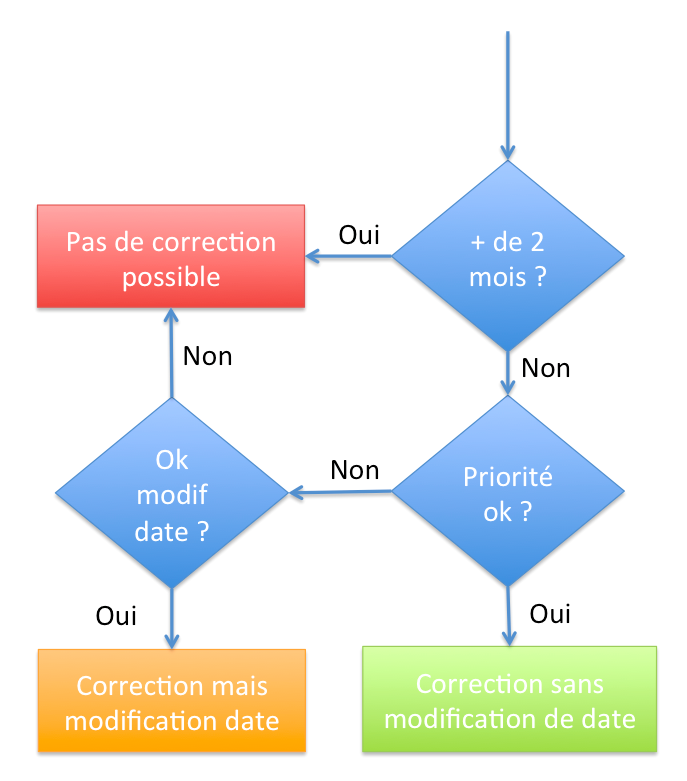
The PCT therefore treats the applicant’s error and the intention to make a reference on the same basis…
Prerequisite for Benefiting from this Incorporation
This correction is only possible if the request contains a statement indicating that, where the description, drawings, or claims (in whole or in part) are not present in the international application but are contained in the priority document, such element (or part thereof) may be incorporated by reference (A11.1.iii PCT together with R4.1.c.iv PCT together with R4.18 PCT).
This statement is, by default, included in the request form provided by WIPO.
Incorporation by reference is only possible for applications filed on or after April 1, 2007.
Possible reservations of Contracting States (RO or designated States)
Certain States have indicated reservations regarding this possibility of correction after the filing date:
- BE Intellectual Property Office (Belgium);
- CU Cuban Industrial Property Office;
- CZ Industrial Property Office (Czech Republic);
- DE German Patent and Trademark Office;
- ID Directorate General of Intellectual Property (Indonesia);
- IT Italian Patent and Trademark Office;
- JP Japan Patent Office;
- KR Korean Intellectual Property Office;
- MX Mexican Institute of Industrial Property;
- PH Intellectual Property Office (Philippines).
Identification of the error and time conditions
Initially, correction is only possible:
- if the applicant requests incorporation on their own initiative:
- within a period of two months after the filing of the first papers (R20.7.a.ii PCT), or
- as long as the RO has not sent a notification indicating that the application is not an international application and will not be processed as such (R20.7.b PCT).
- if the RO notices the applicant’s error (R20.5.a PCT, if part of the description or claims is missing or all or part of the drawings, R20.3.a PCT, if the entire description or all claims are missing, R20.5bis.a PCT, if the entire description or all claims, or all drawings are incorrect) by sending a notification and the applicant requests correction:
- within a period of two months after the RO’s notification (R20.7.a.i PCT).
- as long as the RO has not sent a notification indicating that the application is not an international application and will not be processed as such (R20.7.b PCT).
In the latter case (i.e., the RO notices an omission or error in a complete part), there are two scenarios (R20.5.a PCT):
- The applicant may request incorporation because a reference was made:
- in this case, the filing date is not modified.
- The applicant had not made a reference:
- the filing date is changed to the date on which the corrected new parts are submitted.
Incorporation by reference to a priority document
Principle
Where all the previous conditions are met (the priority document contains the missing elements/parts and the international application contains the declaration of incorporation by reference), the applicant may correct their filing by submitting a confirmation of incorporation (R20.6 PCT).
This confirmation must include:
- a letter confirming the declaration of incorporation by reference (R20.6.a PCT),
- the sheets that were missing from the international application at the time of filing, which must be provided (R20.6.a.i PCT together with R12.1bis PCT):
- in the language of the application as filed, and
- where applicable, in the language required for the purposes of international search and/or publication.
- an indication of where the missing parts appear in the priority document and in its translation, if required (R20.6.a.iv PCT),
- if the priority document has not already been submitted, a copy of the earlier application as filed (R20.6.a.ii PCT),
- a translation of the priority document (R20.6.a.iii PCT):
- in the language of the application as filed if the latter is not in the language of the application, and
- where applicable, in the language required for the purposes of international search and/or publication.
No other information is required (e.g., justification).
Priority claim present at filing
Unlike what is possible before the EPO, it is not possible to add or correct a priority claim after the filing and then request incorporation by reference. The priority claim must exist on the filing date (Applicant’s Guide §6.028).
Case of a RO that has not notified reservations
If the above conditions are met, the correction is accepted and the filing date will be:
- the date on which the minimum requirements were met (PCT Rule 20.6.b together with PCT Rule 20.5.b if part of the description or claims is missing or all or part of the drawings is missing)
- the date on which the minimum requirements were met, considering that the missing elements were contained in the first filed documents (PCT Rule 20.6.b together with PCT Rule 20.3.b.ii, if the entire description or all claims is missing)
An indication of this fact is shown on the front page of the publication (PCT Rule 48.2.b.v).
If confirmation is not received within the time limits, the correction cannot be made:
- it is not an international application if the minimum requirements are not met (PCT Rule 20.4);
- the missing parts (given that the minimum requirements are met) cannot be added to the existing international application.
The designated or elected Offices are not bound by the RO’s decision.
Case of a RO that has notified reservations
The RO cannot accept confirmation of the incorporation, as it is not bound by the provisions, but it may process the received sheets.
The RO will then treat the amendment as an « other correction » within the meaning of the next paragraph.
However, the applicant may request the RO to transmit the application to the IB pursuant to PCT Rule 19.4.a.iii.
Other corrections (description, claims, drawings)
In all other cases (i.e., no priority, no declaration, or missing content not contained in the priority), the applicant cannot make the correction without changing the filing date.
If the RO receives a request for correction of the application within 2 months from the filing date or, where applicable, from the RO’s notification (PCT Rule 20.7), the filing date is set to that date:
- if the entire description or all claims is missing (PCT Rule 20.3.b.i);
- if part of the description or claims is missing or all or part of the drawings is missing:
- and if the date has not yet been set (PCT Rule 20.5.b),
- and if the date has already been set to another date, the filing date is then reset (PCT Rule 20.5.c).
Upon receipt of the correction documents, the RO will notify the applicant that this correction results in a change to the filing date (PCT Rule 20.3.b.i or PCT Rule 20.5.b or PCT Rule 20.5.c together with PCT Rule 20.2.c).
If the filing date has been corrected (PCT Rule 20.5.c, missing part and filing date previously set), the applicant has a one-month period to oppose it (PCT Rule 20.5.e) and thus waive the corrections they themselves proposed.
Procedure following filing
Allocation of a filing date by the RO
When the RO allocates a filing date to an application, the applicant is notified promptly of this date and the patent application number (R20.2.c PCT).
The IB is informed of this notification and the original copy of the application is sent to it (R20.2.c PCT).
Receipt of the original copy by the IB
The original copy must normally reach the IB within 13 months from the priority date (R22.1.b PCT).
Upon receipt of this copy (as soon as possible), the IB notifies:
- the applicant (R24.2.a.i PCT);
- the RO (R24.2.a.ii PCT);
- the ISA (R24.2.a.iii PCT).
This notification contains (R24.2.a PCT):
- the application number;
- the filing date;
- the name of the applicant;
- the claimed priority dates;
- the designated States (in the applicant’s notification only).
Withdrawal by the RO of a filing date
If, after allocating a filing date, the RO finds that the conditions were not in fact met, the application is considered withdrawn (A14.4 PCT together with R29.1.ii PCT).
Thus, the application retains its filing date and may therefore serve as the basis for a priority claim.
However, this finding may not be made after the expiry of a period of 4 months from the filing date (A14.4 PCT together with R30.1 PCT) and must be preceded by a notification to the applicant indicating the RO’s intention to make this finding (R29.4.a PCT): the applicant then has two months to submit observations or confirm incorporation by reference.