The UPC comprises a Court of First Instance, a Court of Appeal and a Registry (A6 UPCA), to which a mediation and arbitration centre is added.
First instance
The Court of First Instance comprises a central division as well as local and regional divisions (A7(1) UPCA). Whatever the division, the panels have a multinational composition and in principle sit with three judges (A8(1) UPCA), chaired by a legally qualified judge (A8(8) UPCA).
The central division
Location
The central division has its seat in Paris, with sections in Munich and Milan (A7(2) UPCA).
Originally, the third section was to sit in London. After Brexit, its competences were divided between Paris, Munich and a new section in Milan, which opened in June 2024 (decision of the Administrative Committee of 26 June 2023, Articles 1 and 4). A delicious detail: the amended text of Article 7(2) still refers to… “sections in London and Milan and in Munich”.
Yes, I know… things are off to a fine start when a central division is not centralised 🙂
The distribution of cases between Paris, Munich and Milan depends on the technical field of the patent: see “Allocation between the divisions”.
Composition
The central division sits in a panel of 3 judges (A8(6) UPCA):
- 2 legally qualified judges of two different nationalities;
- 1 technically qualified judge with qualifications and experience in the field of technology concerned.

If the case concerns an action against a decision of the EPO relating to the unitary patent (A32(1)(i) UPCA), 3 legally qualified judges sit (A8(6) UPCA).
The parties may agree to have their case heard by a single legally qualified judge (A8(7) UPCA).

The local divisions
Principle
A Contracting Member State may set up a local division on its territory, and one additional local division for every one hundred patent cases per year, up to a maximum of four (A7(3) and (4) UPCA).
Location
The local divisions in operation are as follows (up-to-date list: the Court’s website):
- Germany: Düsseldorf, Hamburg, Mannheim and Munich;
- Austria: Vienna;
- Belgium: Brussels;
- Denmark: Copenhagen;
- Finland: Helsinki;
- France: Paris;
- Italy: Milan;
- Netherlands: The Hague;
- Portugal: Lisbon;
- Slovenia: Ljubljana.
States that have neither a local nor a regional division (Bulgaria, Luxembourg, Malta, Romania) refer to the central division (A33(1) UPCA, last subparagraph).
Composition
The local divisions sit in a panel of 3 legally qualified judges, whose distribution depends on the caseload of the State concerned:
- if fewer than 50 patent cases per year on average were commenced there: 1 judge who is a national of the State hosting the division and 2 judges of other nationalities, drawn from the Pool of Judges (A8(2) UPCA);
- if 50 or more cases per year: 2 judges who are nationals of the State hosting the division and 1 judge of another nationality, drawn from the Pool and, where necessary, allocated to that division on a long-term basis (A8(3) UPCA).
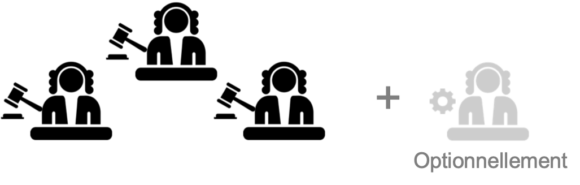
An additional technically qualified judge, with qualifications and experience in the field of technology concerned, is allocated to the panel at the request of a party, or on the panel’s own initiative after hearing the parties (A8(5) UPCA). Such a judge is also allocated where the local division decides to hear a counterclaim for revocation itself (A33(3)(a) UPCA).
A party’s request must indicate the field of technology concerned and be made as early as possible: in principle during the written procedure, later only if justified by a change of circumstances, such as new submissions by the opposing party (R33.1 and R33.2 RoP UPC). The judge-rapporteur may also request the allocation of a technically qualified judge at any time (R34 RoP UPC).
The parties may agree to have their case heard by a single legally qualified judge (A8(7) UPCA).
The regional division
Principle
Two or more Contracting Member States may together set up a regional division; it may hear cases in multiple locations (A7(5) UPCA).
Location
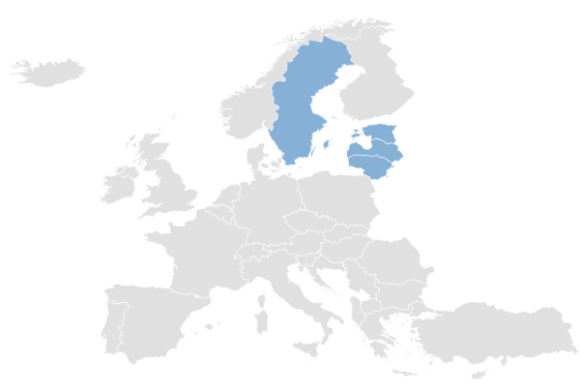
Only one regional division exists: the Nordic-Baltic division, shared by Sweden, Estonia, Latvia and Lithuania, with its seat in Stockholm (up-to-date list: the Court’s website).
Composition
The regional division sits in a panel of 3 legally qualified judges (A8(4) UPCA):
- 2 judges chosen from a regional list, nationals of the States of the division;
- 1 judge who is not a national of those States, drawn from the Pool of Judges.
The rules on the additional technically qualified judge and on the single judge are the same as for the local divisions (A8(5) and (7) UPCA).
Court of Appeal
Role
The Court of Appeal hears appeals against decisions and certain orders of the Court of First Instance, whichever division gave them (see “Appeal and rehearing”).
Location
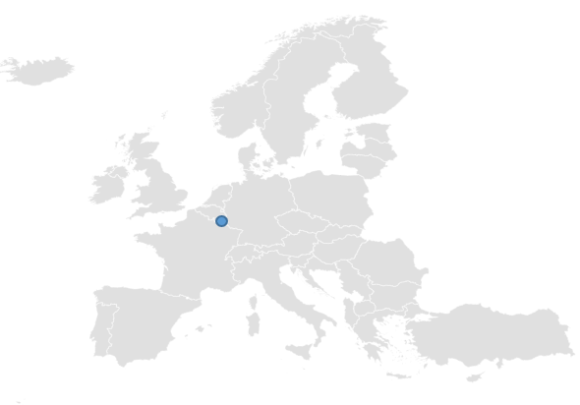
The Court of Appeal has its seat in Luxembourg (A9(5) UPCA).
Composition
The panels of the Court of Appeal sit in a composition of 5 judges (A9(1) UPCA):
- 3 legally qualified judges who are nationals of 3 different Contracting Member States;
- 2 technically qualified judges with qualifications and experience in the field of technology concerned.

The panel is chaired by one of the legally qualified judges (A9(3) UPCA). For actions against decisions of the EPO relating to the unitary patent, it sits with three legally qualified judges (A9(2) UPCA).
A case of exceptional importance, in particular where it may affect the consistency of the case law, may be referred to the full Court of Appeal, composed of the President of the Court of Appeal and at least ten judges, which decides by a three-quarters majority (R238A RoP UPC).
No supreme court
It should be noted that, in this structure, there is no supreme court or review on points of law (such as the French Cour de cassation, for example): the Court of Appeal decides at last instance, subject only to rehearing and to references for a preliminary ruling to the CJEU (see “Legal status of the UPC”).
The Registry
The Registry is set up at the seat of the Court of Appeal, in Luxembourg, and sub-registries exist at each division of the Court of First Instance (A10(1) and (2) UPCA). It keeps the register, which is public subject to the rules on confidentiality (see “Procedural principles”), and receives opt-outs.
Patent Mediation and Arbitration Centre
Principle
In order to facilitate the amicable settlement of disputes and to reduce costs for the parties, the Agreement establishes a patent mediation and arbitration centre, better known by its acronym PMAC (A35(1) and (2) UPCA).
It should however be noted that a patent may not be revoked or limited in mediation or arbitration proceedings (A35(2) UPCA). On the other hand, a settlement reached through the Centre is enforceable as a decision of the Court (same Article, referring to A82 UPCA).
Location
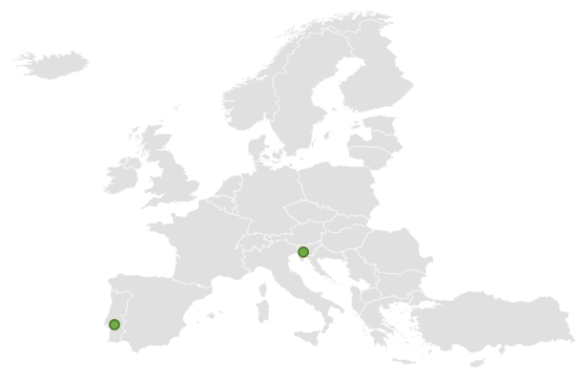
The Centre has its seats in Ljubljana and Lisbon (A35(1) UPCA).
Operation
The Centre establishes its own Mediation and Arbitration Rules and draws up a list of mediators and arbitrators (A35(3) and (4) UPCA). Having long remained on paper, it began operating in 2026, starting with mediation (start of operations announced for early 2026 by the European Commission).
The UPC Rules of Procedure draw the consequences: the judge-rapporteur explores with the parties the possibility of using the Centre at the interim conference (R104(d) RoP UPC), and a settlement reached at the Centre before the end of the interim procedure entitles the parties to a reimbursement of 65% of the court fees (R370.9(c) RoP UPC).